Safety & Prevention
Flu, COVID-19 & RSV: Staying Safe This Respiratory Season
Oct 8, 2026 · 4 min read
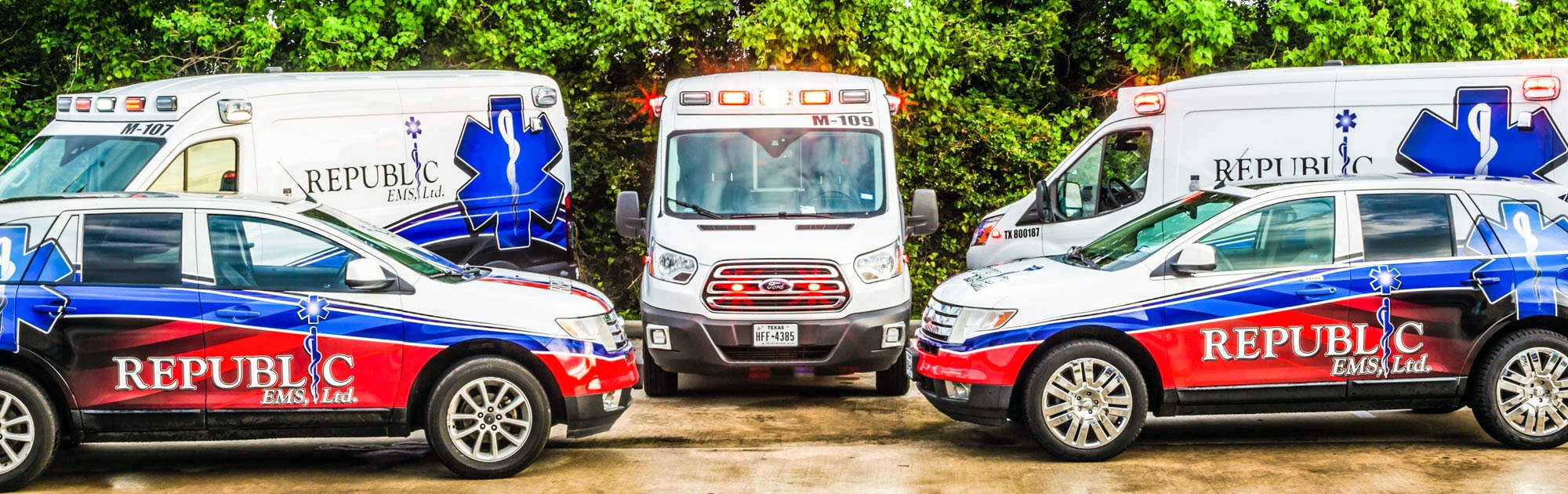
A plain-language guide to Texas EMS certification: the levels, the approved course, the National Registry exam, the DSHS application, fingerprinting and renewal.
If you want a career where you show up for people on their worst day, emergency medical services may be the right fit. In Texas, EMS personnel are certified or licensed by the Texas Department of State Health Services (DSHS). This guide walks through the path step by step, using DSHS, the National Registry of Emergency Medical Technicians (NREMT) and the U.S. Bureau of Labor Statistics (BLS) as sources.
DSHS describes five levels of EMS certification. From highest to lowest, they are:
Texas has two paramedic levels. According to DSHS, EMT-Paramedic certification is for those who have completed a paramedic course but have not completed a degree, while Paramedic Licensure is “for those with a two year EMS degree or a four year degree in any field.”
DSHS lists the same core steps for initial certification or licensure. You must:
The training course is where you learn the knowledge and hands-on skills for your level. BLS notes that EMT programs “typically take less than 1 year” for EMT-Basic certification, and that paramedic training builds on that foundation with more advanced care.
DSHS states that “all testing for ECA, EMT, Advanced EMT and paramedic certification/licensure will be done through National Registry of Emergency Medical Technicians at Pearson VUE testing sites.” A few points from the DSHS exam page:
The NREMT describes its mission as “Advancing EMS through partnership, research, and lifelong clinical assessment.” Its website has exam information and preparation resources for each certification level.
According to the BLS Occupational Outlook Handbook, EMTs and paramedics “assess injuries and illnesses, provide emergency medical care, and may transport patients to medical facilities.” Typical duties include:
BLS explains that paramedics provide “more extensive prehospital care than do EMTs.” That can include giving a wider range of medications, such as through intravenous methods, advanced airway management and interpreting electrocardiograms.
The job is demanding. BLS notes that the “work is physically strenuous,” with plenty of kneeling, bending and lifting while caring for and moving patients, and that schedules may include nights, weekends and holidays. Important qualities include communication skills, compassion, interpersonal skills, physical strength and problem-solving skills. Looking ahead, BLS says overall employment of EMTs and paramedics “is projected to grow 6 percent from 2025 to 2035.”
Texas EMS certification runs on a four-year cycle. DSHS recommends starting the recertification process “three to four months prior to your expiration date.” DSHS renewal options include:
If you choose the CE route, DSHS lists minimum totals over the four-year period of 36 hours for ECA, 72 for EMT, 108 for Advanced EMT and 144 for EMT-Paramedic and Licensed Paramedic. All renewal applicants must also complete an EMS jurisprudence exam approved by DSHS. After your initial fingerprinting, DSHS says you do not need to repeat it at renewal, unless you reapply more than a year after your certification expires.
Republic EMS, Ltd. has been a licensed Texas EMS provider since early 2008. We serve Greater Houston, Dallas, San Antonio, Corpus Christi, Beaumont and surrounding areas, and we are dedicated to serving freestanding emergency centers.
We are hiring certified Paramedics and EMTs. If you hold a current Texas certification, apply here.
Share this article
Safety & Prevention
Oct 8, 2026 · 4 min read
Safety & Prevention
Sep 24, 2026 · 4 min read
Safety & Prevention
Sep 17, 2026 · 4 min read